


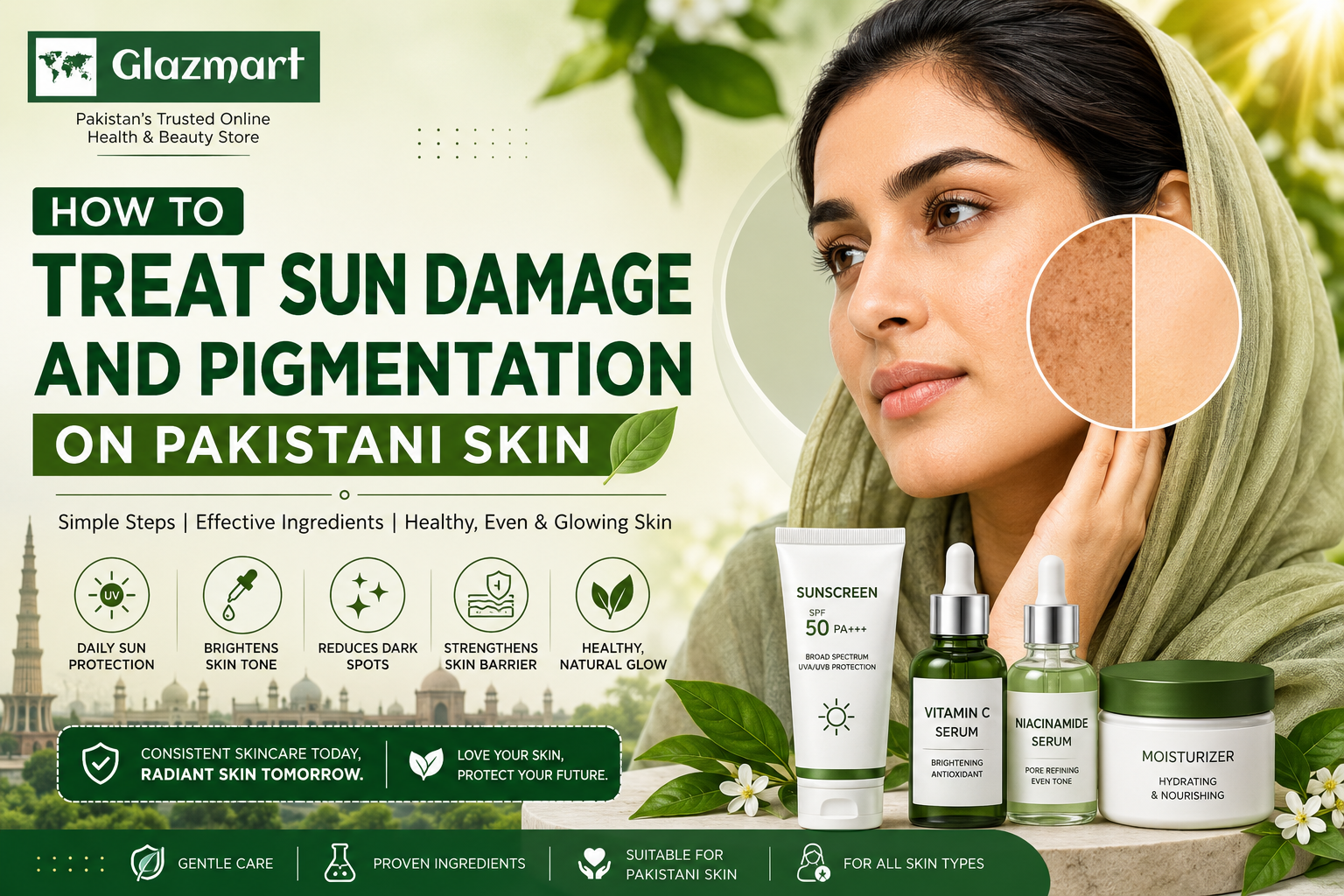
Living in Pakistan means dealing with strong sunlight, high temperatures, dust, pollution, and frequent outdoor exposure. Over time, these factors can affect the appearance of the skin and contribute to tanning, uneven skin tone, dark spots, and pigmentation. For many people, pigmentation becomes more noticeable on the face, forehead, cheeks, nose, and upper lip.
If you are searching for how to treat sun damage in Pakistan, the first step is understanding that pigmentation does not usually disappear overnight. A consistent skincare routine, daily sun protection, suitable brightening ingredients, and patience can make a significant difference.
GlazMart offers skincare products that can help you build a consistent routine according to your skin’s needs.
What Is Sun Damage?
Sun damage refers to changes in the skin caused by repeated exposure to ultraviolet radiation and other components of sunlight. You may notice these changes as tanning, uneven pigmentation, dark spots, dullness, rough texture, fine lines, or an overall loss of brightness.
Sun exposure can stimulate the production of melanin, the pigment responsible for skin color. When melanin production increases in certain areas, the result can be darker patches or spots.
For someone living in Pakistan, sun protection should be an everyday skincare habit rather than something reserved for vacations or summer days.
Even if you do not experience obvious sunburn, regular exposure can contribute to gradual pigmentation and uneven skin tone.
Why Is Pigmentation Common on Pakistani Skin?
Pigmentation can have several causes, and sunlight is only one of them. Pakistani skin can develop dark spots due to a combination of environmental exposure, acne, inflammation, hormonal changes, and unsuitable skincare products.
Common causes include:
- Frequent sun exposure
- Tanning
- Post-acne marks
- Hormonal pigmentation
- Melasma
- Skin irritation
- Aggressive exfoliation
- Picking or squeezing pimples
- Harsh skincare products
- Inconsistent sunscreen use
- Heat and outdoor exposure
One important point is that not every dark patch is simply sun damage. Melasma, post-inflammatory hyperpigmentation, freckles, and other pigmentation concerns can look similar but may require different approaches.
That is why identifying the possible cause is an important part of learning how to treat sun damage in Pakistan.
How to Treat Sun Damage in Pakistan
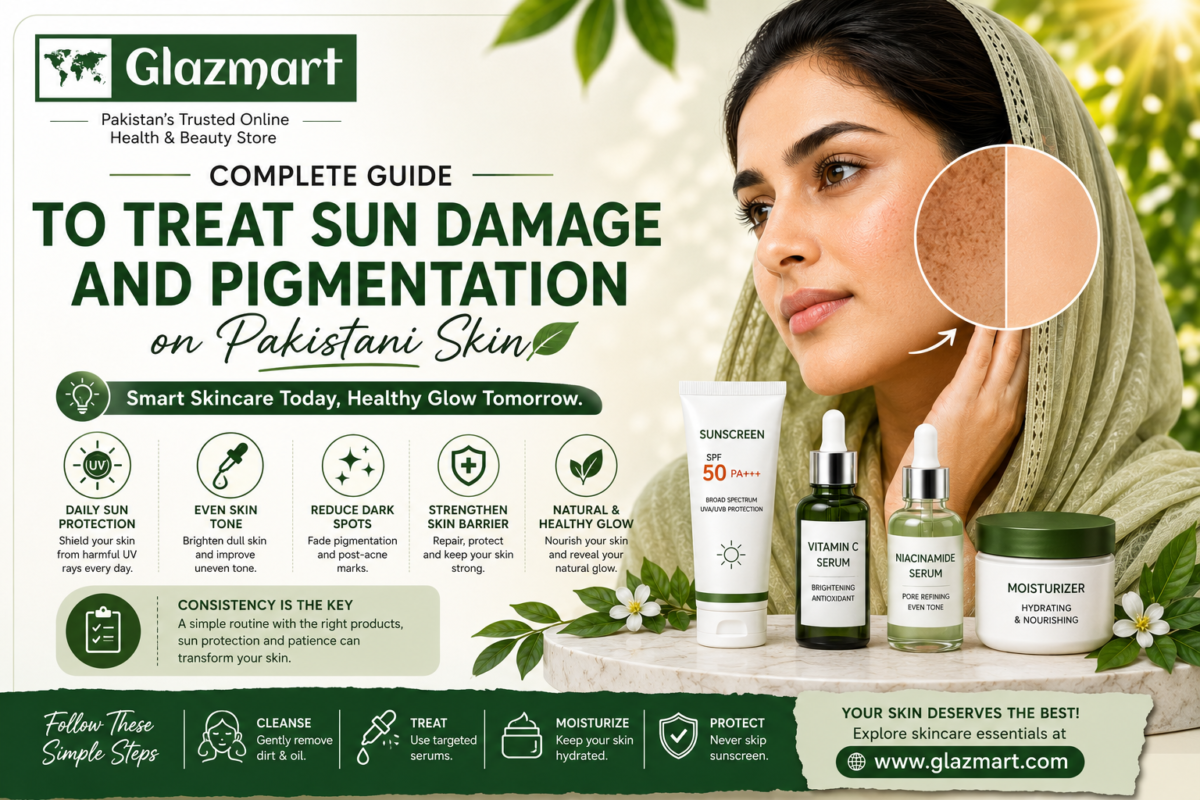
The best approach is usually not one single product. Instead, think of pigmentation care as a complete routine involving prevention, gentle skincare, targeted ingredients, and consistency.
1. Make Sunscreen the Most Important Step
If you want to know how to treat sun damage in Pakistan, start with sunscreen.
Using brightening serums while continuing to expose your skin to strong sunlight without adequate protection can make pigmentation difficult to manage.
Choose a broad-spectrum sunscreen with SPF 30 or higher. Apply it generously to exposed areas, especially your face, ears, neck, and other areas that receive sunlight.
Sunscreen should be used every morning, including days when you are mostly indoors, because daylight exposure still occurs through normal daily activities.
If you spend several hours outdoors, sweating or swimming can reduce protection, so sunscreen needs to be reapplied..
2. Protect Your Skin Beyond Sunscreen
Sunscreen is important, but physical protection can make your routine even more effective.
When possible, reduce unnecessary direct exposure during intense sunlight. You can also use:
- Wide-brimmed hats
- Sunglasses with UV protection
- Umbrellas
- Long sleeves
- Shade when spending extended periods outdoors
This is particularly useful for people who commute, work outdoors, travel frequently, or spend a lot of time in direct sunlight.
The less unnecessary sun exposure your skin receives, the easier it can be to maintain an even-looking complexion.
3. Use Vitamin C for Uneven Skin Tone
Vitamin C is a popular skincare ingredient for dullness and uneven skin tone. It is an antioxidant that can support the skin against environmental stress and is commonly included in routines designed to improve the appearance of pigmentation.
A vitamin C serum can be incorporated into a morning routine after cleansing and before moisturizer and sunscreen.
However, more is not always better. If your skin is sensitive, begin gradually rather than immediately using strong products every day.
A simple morning routine can look like:
Cleanser → Vitamin C serum → Moisturizer → Sunscreen
If irritation occurs, reduce frequency and allow your skin to recover.
4. Consider Niacinamide for Pigmentation-Prone Skin
Niacinamide is another useful ingredient for people dealing with uneven-looking skin tone. It can support the skin barrier and is commonly used in skincare routines for excess oil, redness, uneven tone, and the appearance of dark spots.
One advantage of niacinamide is that it can fit into many different routines.
For example:
Cleanser → Niacinamide serum → Moisturizer → Sunscreen
You do not necessarily need to use multiple strong ingredients at the same time. A simple routine that you can follow consistently is often easier to maintain than a complicated routine containing numerous active products.
5. Keep Your Skin Barrier Healthy
One of the biggest mistakes people make while trying to remove pigmentation is using too many aggressive products.
Scrubbing the face repeatedly, using multiple exfoliating acids, applying irritating products, or constantly changing skincare can damage the skin barrier.
When the skin becomes irritated, inflammation can sometimes make dark marks more noticeable, particularly in medium to deeper skin tones.
Signs that your routine may be too aggressive include:
- Burning
- Persistent redness
- Excessive dryness
- Peeling
- Tightness
- Stinging after applying products
- Increased sensitivity
If these problems appear, simplify your routine.
A healthy skin barrier should be treated as part of pigmentation care rather than something separate from it.
6. Exfoliate Carefully
Exfoliation can help improve the appearance of dull and uneven skin, but it should be approached carefully.
Ingredients such as glycolic acid and other exfoliating acids can help remove dead skin cells and improve skin texture. However, excessive exfoliation can cause irritation.
For pigmentation-prone Pakistani skin, gentle and controlled exfoliation is usually preferable to aggressive scrubbing.
Avoid using several exfoliating products simultaneously unless you already understand how your skin reacts to them.
If your skin becomes irritated, stop exfoliating until it feels comfortable again.
7. Try Azelaic Acid for Dark Spots
Azelaic acid is another ingredient commonly used in pigmentation-focused skincare. It can be particularly interesting for people who experience both acne and dark marks because acne inflammation can contribute to post-inflammatory hyperpigmentation.
If you are prone to breakouts followed by dark spots, controlling the acne itself is important.
Otherwise, you may continuously develop new pigmentation while trying to fade older marks.
When introducing azelaic acid, start slowly and monitor your skin for irritation.
8. Understand the Difference Between Tanning and Pigmentation
Tanning and pigmentation are related to melanin production, but they are not necessarily the same concern.
A tan may appear as a relatively general darkening of the skin after sun exposure. Pigmentation may appear as specific spots, patches, or areas that are noticeably darker than the surrounding skin.
For example, you may have:
- Overall facial tanning
- Dark patches on the cheeks
- Dark spots left after acne
- Pigmentation around the mouth
- Uneven forehead pigmentation
- Melasma-like patches
Understanding the difference helps you avoid treating every type of discoloration in exactly the same way.
9. Do Not Pick Acne or Dark Spots
Picking pimples can create inflammation and potentially leave behind darker marks.
If you already have pigmentation, repeatedly touching, scratching, or squeezing the affected area can make the situation more difficult to manage.
Instead, focus on treating acne appropriately and allowing the skin to heal.
This is especially important if your skin tends to leave dark marks after breakouts.
A pigmentation routine works better when you are also preventing new marks from forming.
10. Avoid Harsh Skin-Lightening Practices
Trying to achieve instant results can lead people toward extremely harsh products or unsafe DIY methods.
Avoid applying household chemicals, bleach, concentrated acids, or other unsuitable substances to your skin.
Also be careful with products that promise dramatic whitening in a very short period.
Your goal should be healthier, more even-looking skin rather than aggressively changing your natural complexion.
A good skincare routine should improve the appearance of pigmentation while respecting the skin barrier.
Build a Simple Morning Routine
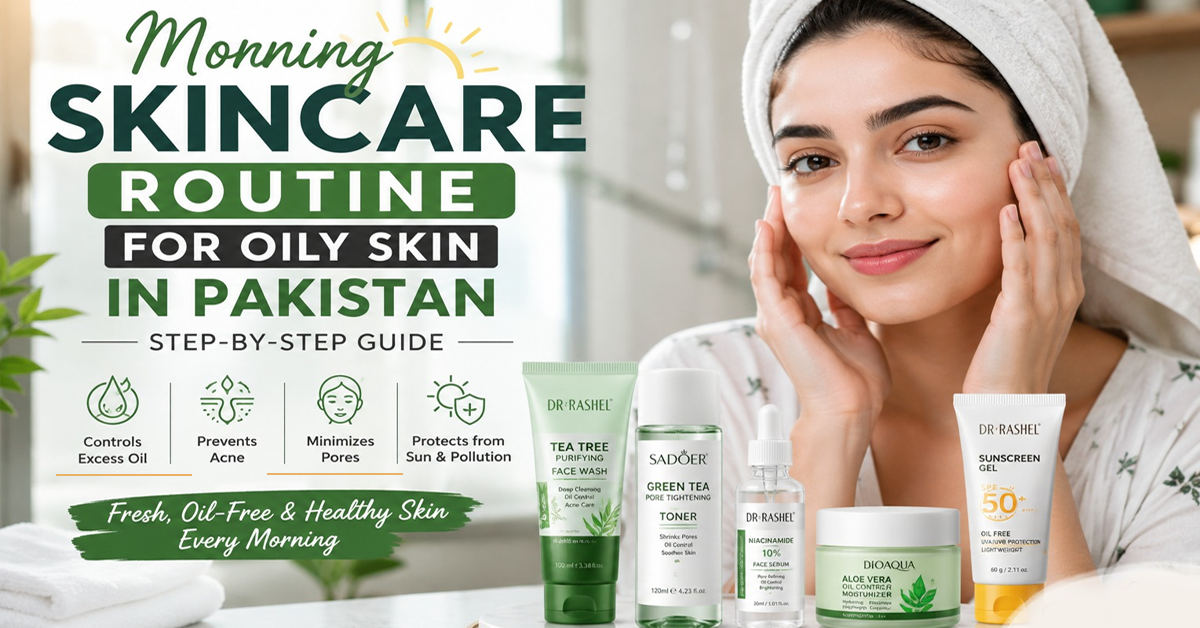
A practical morning routine for pigmentation-prone Pakistani skin can include four basic steps.
Step 1: Gentle Cleanser
Start with a cleanser that removes excess oil, sweat, and impurities without leaving the skin extremely dry or tight.
Step 2: Targeted Serum
Depending on your skin and concerns, you can consider ingredients such as vitamin C or niacinamide.
You do not need to layer every active ingredient.
Step 3: Moisturizer
A moisturizer helps support the skin barrier and can reduce dryness caused by certain active ingredients.
Choose the texture according to your skin type. Oily skin may prefer a lightweight formula, while dry skin may benefit from a richer moisturizer.
Step 4: Sunscreen
Finish with broad-spectrum sunscreen with SPF 30 or higher.
This step is essential if your goal is to prevent additional sun-related pigmentation.
Build a Gentle Night Routine
Your nighttime routine can focus more on recovery and targeted treatment.
A simple routine could be:
Cleanser → Treatment serum → Moisturizer
Depending on your skincare needs, you may use ingredients such as niacinamide, azelaic acid, or a suitable retinoid.
Retinoids can be effective for various skin concerns, but stronger retinoids may cause irritation and should be introduced carefully. If you are considering prescription-strength treatment, professional guidance is recommended.
Pregnant or breastfeeding individuals should also discuss active skincare ingredients with an appropriate healthcare professional before use.
How Long Does It Take to Fade Pigmentation?
One of the most important things to understand about pigmentation is that results take time.
A dark spot that developed recently may fade more quickly than pigmentation that has been present for years.
Your results can depend on:
- The cause of pigmentation
- How deep the pigment is
- Your skin type
- Your skincare routine
- Sun exposure
- Whether new pigmentation continues to develop
- How consistently you use your products
Do not expect a few days of skincare to completely remove long-standing pigmentation.
Consistency is much more important than constantly switching products.
When Should You See a Dermatologist?
Some pigmentation concerns are difficult to treat with ordinary skincare.
Consider professional evaluation if:
- Pigmentation is spreading quickly
- Dark patches continue getting darker
- You suspect melasma
- Pigmentation does not improve after consistent skincare
- Your skin becomes increasingly irritated
- You have unusual changes in a mole or dark spot
- You are unsure what is causing the pigmentation
- You want prescription-strength treatment
A dermatologist can determine whether you are dealing with melasma, post-inflammatory hyperpigmentation, sun spots, or another skin condition.
Professional treatment may sometimes include prescription creams or procedures such as chemical peels, microneedling, or laser-based treatments. These should not be performed casually, particularly on pigmentation-prone skin, because inappropriate treatment can sometimes cause additional irritation or pigmentation.
Common Mistakes When Treating Sun Damage
Using Sunscreen Only During Summer
Sun protection should be part of your everyday routine rather than a seasonal habit.
Applying Too Many Active Ingredients
More ingredients do not automatically mean faster results.
Combining several powerful treatments can irritate your skin and potentially worsen discoloration.
Scrubbing Dark Spots
Physical scrubbing does not simply remove pigmentation. Excessive friction can irritate the skin.
Changing Products Every Week
Skincare requires patience. Constantly switching products makes it difficult to know what is working and may increase irritation.
Ignoring Moisturizer
Even oily skin needs proper hydration. A damaged skin barrier can make active skincare harder to tolerate.
Forgetting the Neck
The face is not the only area exposed to sunlight. If your neck is regularly exposed, include it in your sun-protection routine.
A Practical Weekly Approach
You do not need an extremely complicated routine to care for pigmentation.
Every Morning
Use:
Cleanser → Brightening serum → Moisturizer → Sunscreen
Every Night
Use:
Cleanser → Treatment → Moisturizer
During the Week
Keep exfoliation limited and gentle according to your skin’s tolerance.
If you are introducing a new active ingredient, introduce it gradually instead of adding several new products at once.
This approach makes it easier to identify irritation and maintain consistency.
How to Treat Sun Damage in Pakistan During Summer
Summer requires extra attention because people often spend more time outdoors, sweat more frequently, and experience stronger heat and sunlight.
During hot months:
- Reapply sunscreen when needed
- Wear protective clothing
- Use a hat when outdoors
- Stay in shade whenever possible
- Keep your skincare routine gentle
- Avoid unnecessary exfoliation
- Keep your skin moisturized
- Avoid picking irritated skin
- Pay attention to sunscreen after sweating
If you commute daily or work outside, make sun protection part of your routine before leaving home.
Can Sun Damage Be Completely Reversed?
Not every type of sun-related skin change can be completely reversed with skincare.
However, consistent protection and appropriate treatment can improve the appearance of uneven tone, dark spots, and dullness while helping prevent additional damage.
The most important strategy is to stop repeatedly triggering the problem.
If you continue receiving significant sun exposure without protection, even an effective pigmentation routine may struggle to deliver the results you want.
Think of pigmentation treatment as a long-term process:
Protect → Treat → Repair → Maintain
This approach is generally more sustainable than searching for an overnight solution.
How GlazMart Can Help With Your Skincare Routine
Choosing the right products is only one part of pigmentation care. The bigger goal is creating a routine that you can follow consistently.
At GlazMart, you can explore skincare products according to your routine and skin concerns.
Whether you are looking for cleansers, serums, moisturizers, sunscreen, or other skincare essentials, building a simple routine can make it easier to stay consistent.
Remember that skincare should be selected according to your skin type and individual concerns rather than simply choosing the product with the strongest claims.
Frequently Asked Questions
1. How to treat sun damage in Pakistan?
The best starting point is daily broad-spectrum sunscreen with SPF 30 or higher, combined with a gentle skincare routine and suitable pigmentation-focused ingredients such as vitamin C, niacinamide, or azelaic acid. Consistency and limiting further sun exposure are essential.
2. What is the best treatment for sun pigmentation?
There is no single treatment that works for every type of pigmentation. Sunscreen is the foundation, while ingredients such as vitamin C, niacinamide, azelaic acid, glycolic acid, or retinoids may be useful depending on the cause and your skin’s tolerance.
3. Can sunscreen reduce pigmentation?
Sunscreen primarily helps prevent further sun-induced pigmentation and can support the fading process by reducing continued exposure. Without adequate sun protection, pigmentation can continue to darken or return.
4. Can pigmentation disappear naturally?
Some pigmentation can gradually fade once its trigger is removed. However, deeper or long-standing pigmentation may take considerably longer and may require targeted skincare or professional treatment.
5. Is vitamin C good for Pakistani skin?
Vitamin C can be a useful ingredient for improving the appearance of uneven tone and supporting antioxidant protection. However, the right formulation and concentration depend on individual skin tolerance.
6. Is niacinamide good for pigmentation?
Niacinamide can be incorporated into routines targeting uneven skin tone and dark spots. It can also support the skin barrier, making it a useful ingredient for many skincare routines.
7. Should I exfoliate if I have pigmentation?
You can use gentle exfoliation if your skin tolerates it, but excessive exfoliation can cause irritation. Start slowly and avoid combining too many exfoliating products.
8. Why does pigmentation become darker after acne?
Inflammation from acne can stimulate excess melanin production, leaving behind dark marks after the pimple heals. Avoiding acne picking and controlling breakouts can help reduce the development of new marks.
Final Thoughts
Learning how to treat sun damage in Pakistan starts with understanding that pigmentation requires prevention as much as treatment. Strong sunlight, daily outdoor exposure, acne, irritation, and inconsistent skincare can all contribute to uneven skin tone.
Start with the basics: protect your skin from sunlight, use a gentle cleanser, maintain your skin barrier, choose suitable brightening ingredients, moisturize regularly, and stay consistent.
Most importantly, do not judge your skincare routine after only a few days. Pigmentation often takes time to improve, and maintaining healthy habits is essential for long-term results.
If you want to build a skincare routine around your specific skin concerns, explore the skincare range available at GlazMart and choose products that fit your skin type and daily routine.